

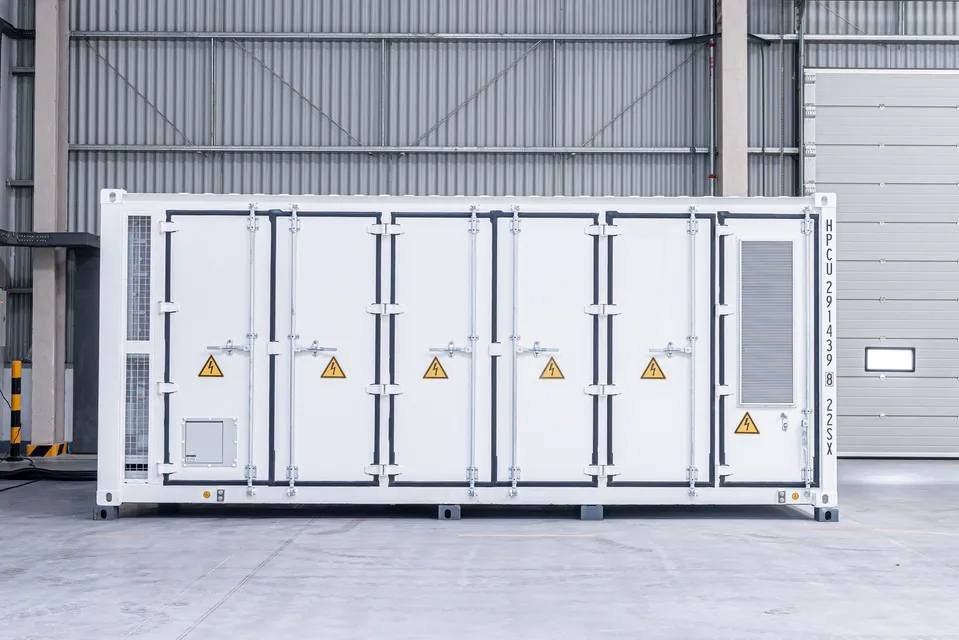
India's battery storage boom is a logistics story
India added about 8.2 GWh of battery energy storage in the first half of 2026, and in May 2026 the Union Cabinet approved a further ₹5,400 crore of viability-gap funding for 30 GWh of new storage. Tenders from SECI, NTPC and state DISCOMs keep coming. Nearly all of that capacity arrives as containerised BESS — battery racks, BMS, HVAC and fire suppression pre-installed in 20 ft or 40 ft containers — trucked from ports such as Mundra, JNPA, Chennai and Krishnapatnam, or from domestic assembly lines, to solar and wind parks in Rajasthan, Gujarat, Andhra Pradesh and beyond.
UN3536: why a BESS container is dangerous goods
A container whose lithium-ion batteries are designed to supply power outside the container is classified as UN3536 — Lithium batteries installed in cargo transport unit, a Class 9 miscellaneous dangerous good. The batteries must be secured to the container's internal structure to prevent short circuits, accidental operation and movement, and must have protection against over-charge and over-discharge. Under the European ADR rules widely referenced in DG practice, UN3536 carries tunnel restriction code (E).
BESS container inspection checklist
- DG declaration, safety data sheet and UN3536 / Class 9 placards on all four sides.
- State of charge as declared by the manufacturer, and BMS status notes.
- Shock and tilt indicators fitted, intact and photographed at dispatch and receipt.
- Container condition: doors, seals, corner castings and any visible damage.
- Twist-locks engaged on the trailer; additional lashing where the trailer has no locks.
- Route avoiding restricted tunnels and sensitive zones; driver briefed on emergency response.
- Unloading: crane or reach-stacker capacity versus container weight; set-down on prepared plinth.
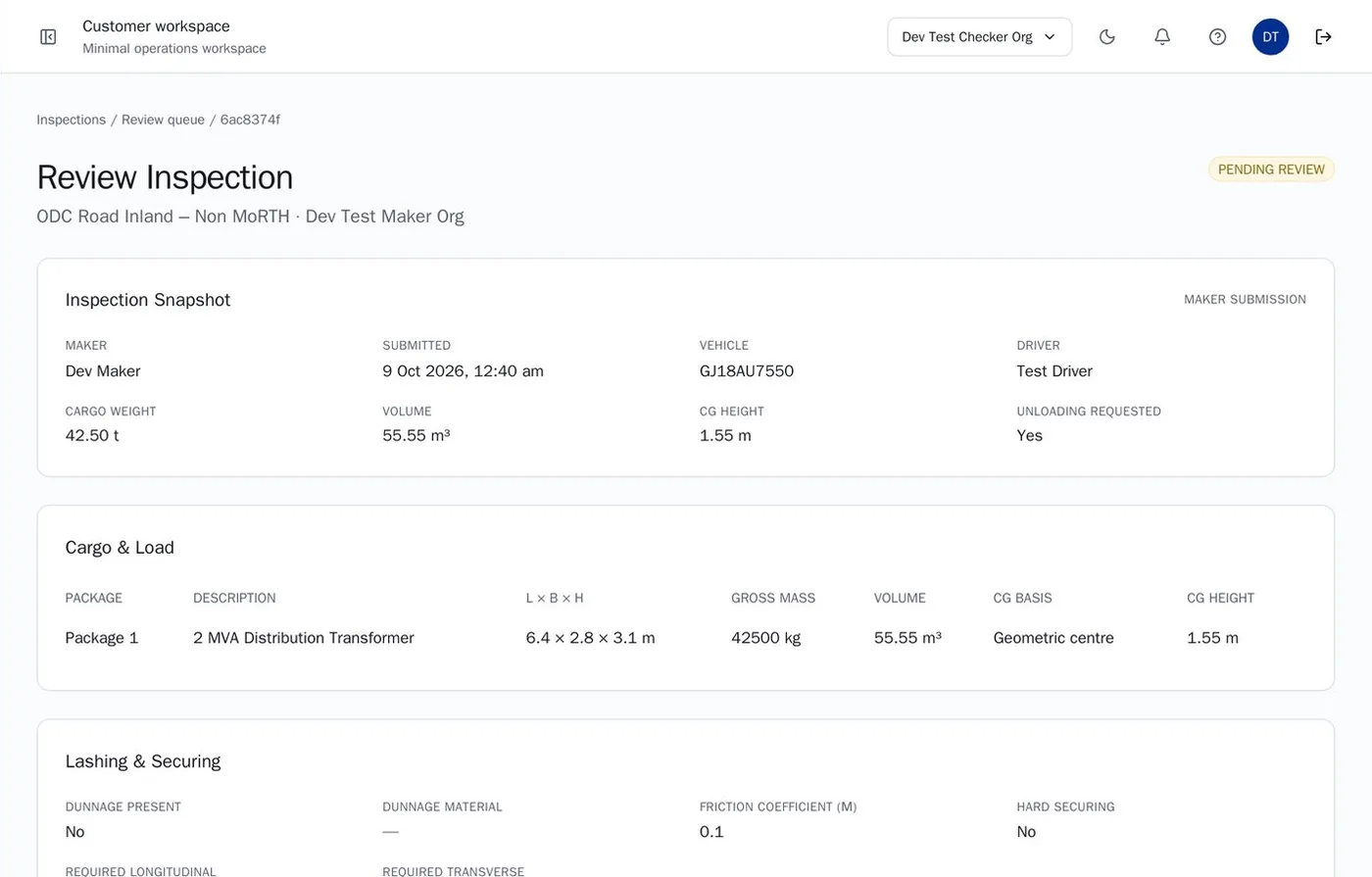
From the iCargoFinsure app · demo data · see more fragments
How ODC OK PLEASE helps on BESS moves
The AI extracts HSN, value, consignor/consignee and vehicle details from the eWay Bill and packing list; the maker adds DG documents and indicator photos; the rules engine checks completeness and securing; and the checker signs an insurer-ready report with every photo geo-tagged and time-stamped. For an insurer covering dozens of containers per project, that consistency is the product. Talk to us about project-wide BESS inspection.
Go deeper
Frequently asked questions
What is UN3536?
UN3536 is the UN number for lithium batteries installed in a cargo transport unit and designed to provide power outside it — the classification used for containerised BESS. It is Class 9 dangerous goods.
Is a BESS container ODC?
Usually not by dimensions, because a standard ISO container is under 2.6 m wide. It is, however, dangerous goods, and heavy units can approach gross weight limits.
What evidence should be captured when moving a BESS container?
DG documents and placards, state of charge, shock and tilt indicators, container condition, twist-locks or lashing, and unloading equipment capacity.
Sources & references
- ESS News — India adds 8.2 GWh of new BESS capacity in H1 2026
- Wingzman — ₹5,400 crore VGF for 30 GWh (May 2026)
- TenderKosh — BESS tenders India 2026
- ADR information — UN3536
- UN3536 for BESS shipping — classification checklist